
R650,00
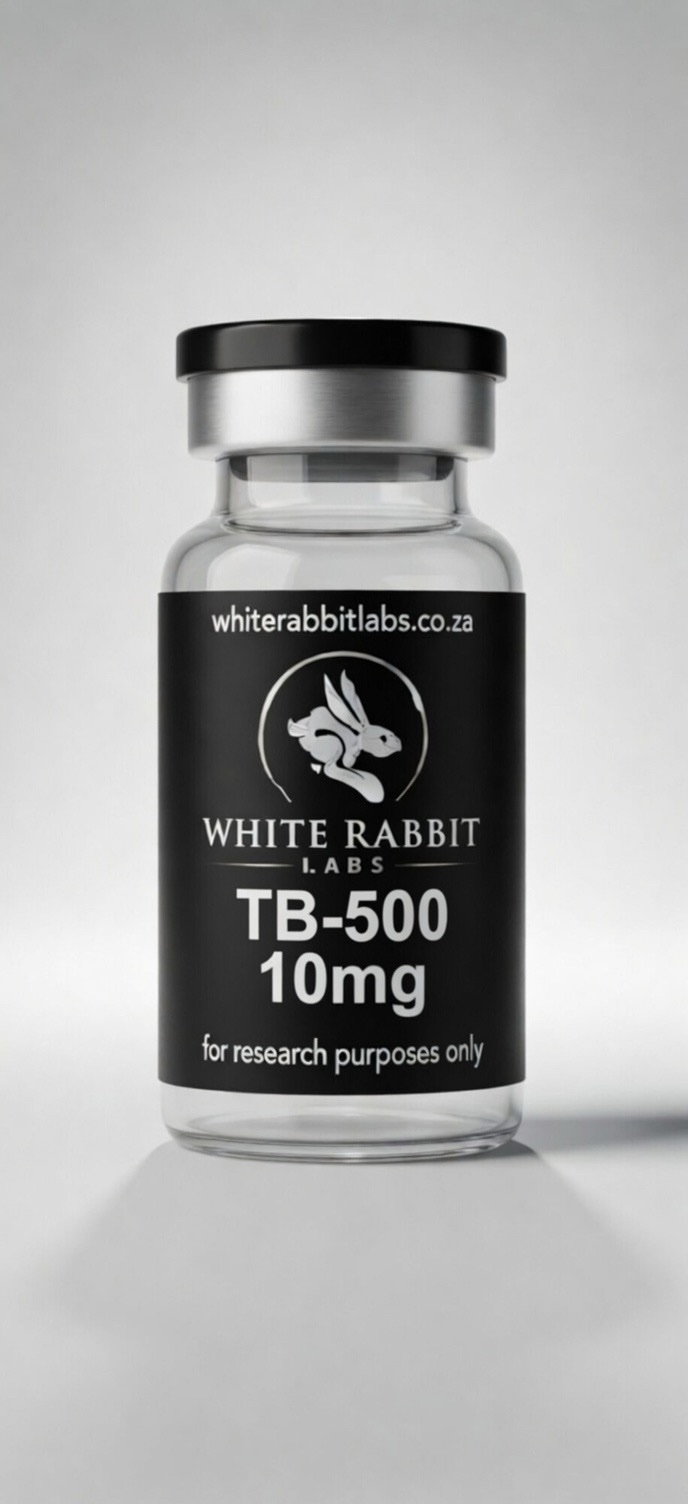
Accelerated Healing, Reduced Inflammation, Scarring and Fibrosis Relief, Heart and Organ Protection, Eye Health, Rejuvenation of Tendons, Ligaments, Wounds, and Cartilage.
R650,00
7 in stock
TB-500 is a lab-made synthetic peptide – a super-short chain of just 7 amino acids copied from the active ‘repair’ section of a natural 43-amino-acid protein called Thymosin Beta-4 (Tb4). Your body already makes Tb4 in almost every cell (highest in platelets and wound fluid) to kick-start healing after injury. Researchers created the tiny TB-500 fragment because it’s cheaper, more stable, and easier to produce while keeping the key healing powers.
Picture TB-500 as your body’s ‘mobile repair squad commander.’ It tells cells to move to the damage site, build new blood vessels, and fix tissue without excessive scarring.
How it works:
– Binds to actin (a protein that shapes cells) unlocks cell migration, proliferation, and differentiation so repair cells rush in fast.
– Sparks angiogenesis (new tiny blood vessels) for oxygen/nutrients.
– Calms inflammation (downregulates NF-B), stops cell death (anti-apoptosis), and reduces scar-forming myofibroblasts.
– Mobilizes stem/progenitor cells and protects organs.
TB-500 (and full Tb4) shows an excellent short-term safety profile in animal and early human studies – no major toxicities even at higher doses.
In human trials (mostly full Tb4): Well-tolerated; no dose-limiting issues or serious events.
Reported mild/rare effects (anecdotal + trial data):
– Injection-site reactions (redness, mild swelling, itching).
– Headache, fatigue, dizziness, or temporary ‘head rush.’
– Mild nausea or flu-like feelings (rare).
Bottom line: Appears very well-tolerated short-term under supervision, but you’re still in experimental territory.
Reconstitute 2ml of bac water into 10mg vial. See Reconstitution Guide
Dosing and Cycling:
No official guidelines (not approved), so these are common research/clinic protocols scaled from animal data and user reports.
Typical dose:
2.5mg per week. Draw 50 units (0.5 ml) from reconstituted vial. Twice a week and the morning. 10mg lasts 4 weeks. Double dose if necessary for more severe cases. See Peptide Calculator
Subcutaneous (under skin) injection – can be systemic (belly) or near the injury for targeted effect. Some use intramuscular.
Cycling:
4-6 weeks on (or until healed), then 2-4 weeks off; some do 3 months on + 1 month off.
For acute injuries: Use during recovery phase only.
Often combined with BPC-157 for synergy.
Tip: Reconstitute with bacteriostatic water; store in fridge. Sterile technique essential.
– Your body’s built-in first responder – Ta4 is released instantly from platelets at any injury site (it’s one of the most abundant proteins in wound fluid).
– Embryonic repair mode – it helps ‘remind’ adult tissues how they healed perfectly as a fetus, reducing scars.
– Horse-racing origins – vets first used it on racehorses for tendon/ligament injuries; athletes noticed and it exploded in popularity.
– Metabolite magic – recent 2024 research suggests the real hero might be a tiny breakdown product (Ac-LKKTE), not the full TB-500.
– Wolverine stack legend – paired with BPC-157 it’s nicknamed after the X-Men character because injuries heal ridiculously fast in animal studies.
– Everywhere protein – Ta4 is in every tissue except red blood cells – one of the most widespread healing molecules we have.
– Short but mighty – the 7-amino-acid version is cheaper and more stable than the full 43-aa natural version.
1. Sosne et al. (2015) Phase 2 randomized trial: T?4 eye drops for severe dry eye (n=~72). 35% less discomfort + 59% less corneal staining vs placebo at 56 days; safe.
2. Wang et al. (2021) Phase 1 safety study: Recombinant T?4 IV in 84 healthy volunteers. Well-tolerated at single/multiple doses; no serious adverse events or accumulation.
3. Zhu et al. (2016) Pilot: T?4-pretreated stem cells in heart attack patients. Improved cardiac function/exercise capacity at 6 months; safe.
4. NCT00832091 (completed 2009) Phase 2: Topical T?4 gel for venous stasis ulcers (dose-response, placebo-controlled). Safe; some patients showed faster wound closure (up to ~1 month earlier in small/moderate ulcers).
5. Philp et al. (2003) Mouse study: Synthetic 7-aa TB-500-like peptide accelerated wound healing in normal, diabetic, and aged mice (comparable to full T?4).
6. Goldstein et al. (2012) Review: T?4 as multi-functional regenerative peptide – mechanisms, angiogenesis, reduced scarring, clinical applications.
7. Xing et al. (2021) Comprehensive review: T?4 in heart disease, wound healing, inflammation; strong preclinical + emerging human data.
8. Rahaman et al. (2024) Metabolism study: TB-500’s wound-healing effects may actually come from its metabolite (Ac-LKKTE); important nuance.
9. Innerbody Research (updated Jan 2026) Summary: Overview of TB4/TB-500 trials for eyes, heart, wounds; safety profile excellent.
10. Peng (March 2026) Clinical review: Musculoskeletal applications – promising animal data, early human signals; calls for more RCTs.
Takeaway: Exciting preclinical healing data + proof-of-concept in human eye/heart/wound trials, but we need big musculoskeletal RCTs for TB-500 specifically.
Energy, Focus, Mood Boost, Mental Clarity, Reduced Fatigue, Addiction Recovery, Anti- Aging, Neuroprotection, Reduced Inflammation.
R900,00
Mitochondrial Repair and Energy Booster, Muscle Strength, Endurance, Heart Function, Neuroprotection.
R1 690,00
Neuroprotection, Oxidative Stress, Toxicity, Inflammation, Metabolic Health, Insulin Sensitivity, Cardiovascular Health.
R910,00
Enhanced Deep Sleep, Cognitive Benefits, Mood Enhancement, Longevity
R590,00
Enhanced Energy, Exercise Performance, Metabolic Health, Glucose Control, Endurance, Physical Capacity, Anti-Aging, Fat-Loss, Inflammation.
R1 160,00
Targeted Visceral Fat Reduction, Improved Body Composition, Liver Fat Reduction, Enhanced Metabolism, Cognitive Enhancement.
R1 150,00